 EN
EN  JP
JP  DE
DE  KR
KR  RU
RU  FR
FR  ES
ES 

Plant-derived Cholesterol: Breaking Through the Limitations of Animal Sources, Ushering in a New Era of Safety for Pharmaceutical Excipients
1、What is Cholesterol? Why is it So Important in Pharmaceutical Formulations?
Q1: What is the basic definition of cholesterol?
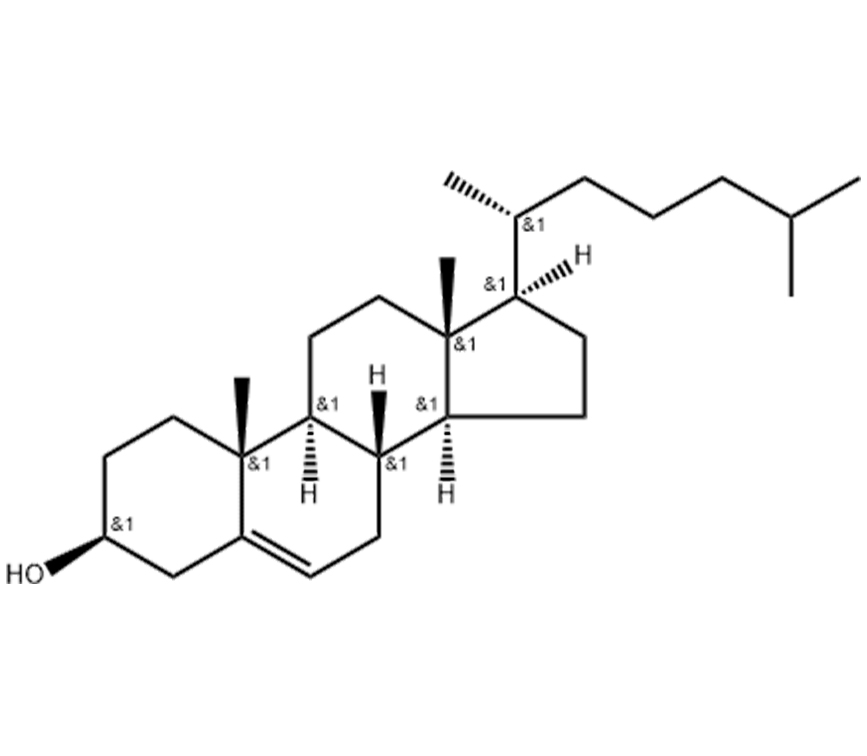
A: Cholesterol (also known as cholest-5-en-3β-ol) is a type of steroid compound with a cyclopentanoperhydrophenanthrene structure. It was one of the first steroids discovered in humans. It forms a crucial scaffold in mammalian cell membranes, regulating membrane fluidity, stability, and function through interactions with phospholipids.
Q2: What are the physiological roles of cholesterol?
A: Cholesterol is a precursor for various key substances, including bile acids, steroid hormones, and Vitamin D, participating in essential human metabolic pathways.
Q3: Why is cholesterol a core component in pharmaceutical excipients?
A: Due to its amphiphilic structure, it has vital applications in drug formulations:
- Core Material for Liposomes: Enhances system stability and completeness of the bilayer membrane structure.
- Emulsifier and Ointment Base: Improves emulsion stability and the texture of topical preparations.
- Stabilizer for Lipid Nanoparticles (LNP): Ensures the structural integrity of nucleic acid delivery systems.
2、Why is the Industry Shifting from “Animal-derived Cholesterol” to “Plant-derived cholesterol“?
Q4: Where is traditional cholesterol mostly sourced from?
A: Primarily from animal tissues (brains or spinal cords of pigs, cattle, sheep) or lanolin (wool grease).
Q5: What are the risks and limitations of animal-derived cholesterol?
A: As global regulations tighten, its limitations are becoming increasingly apparent:
- Safety Risks: Potential risk of zoonotic disease transmission (e.g., BSE/’Mad Cow Disease’ risk).
- Regulatory Restrictions: Avoidance of animal-derived excipients is widely recommended in cell and gene therapy fields.
- Quality Instability: Complex raw material composition, significant supply fluctuations, and notable batch-to-batch variation.
Q6: Why does the industry consider “Plant-derived Cholesterol” a trend?
A: Plant-based products can circumvent the potential risks of animal sources while offering higher quality consistency, meeting the purity and controllability requirements of advanced biologics.
3、What are Pharmaceutical Excipients? How are They Defined by Regulators?
Q7: How does the Chinese Pharmacopoeia define pharmaceutical excipients?
A: The Chinese Pharmacopoeia defines pharmaceutical excipients as vehicles and adjuncts used in the production and compounding of drugs, representing the non-active ingredients in a formulation.
Q8: How are they defined by international standards (USP/EP/IPEC)?
A: Excipients are considered all components of a formulation other than the active pharmaceutical ingredient(s).
Q9: How are pharmaceutical excipients classified?
- By Source: Natural (animal, plant, mineral), semi-synthetic, fully synthetic.
- By Function: Solubilizing agents, emulsifiers, stabilizers, disintegrants, etc.
Note: Animal-derived excipients represent a small proportion (approx. 5%) in the Chinese Pharmacopoeia, but are subject to extremely strict safety requirements.
4、What are the Significant Advantages of Plant-derived Cholesterol Over Animal-derived?
Q10: What are the core advantages of plant-derived cholesterol?
- Higher Safety: Free from animal viruses, cross-species contamination risks, and GMO concerns.
- Superior Quality Consistency: Stable source, well-defined composition, low batch-to-batch variation.
- Meets Demands of Advanced Formulations: Suitable for high-purity scenarios like mRNA and gene therapy.
- Aligns with Global Regulatory Trends: Meets the broad requirement for “Animal-Origin Free” materials in Advanced Therapy Medicinal Products (ATMPs).
5、What are the Typical Application Scenarios for Plant-derived Cholesterol?
The following are the main applications of plant-derived cholesterol provided by Changsha Yuteng New Material Co., Ltd. in pharmaceuticals, biotechnology, and cosmetics:
A: As a Key Lipid in Lipid Nanoparticles (LNP) for delivering:
- mRNA Vaccines
- Gene Therapy Drugs (siRNA, mRNA, DNA)
- Nucleic Acid Delivery Systems for Cell Therapies
- Cosmetic Additive Ingredient
B: Used in constructing Liposomes for encapsulating:
- Small Molecule Drugs
- Peptide and Protein-Based Drugs
- Encapsulated anticancer drugs, antibiotics, immunomodulators, etc.
C: Serves as an Essential Lipid Component in Serum-Free Cell Culture Media, suitable for:
- Monoclonal Antibody Expression Systems
- CAR-T Cell Expansion
- Cytokine Production
D: As a Chemical Synthesis Raw Material, plant-derived cholesterol is also a crucial starting material for synthesizing Vitamin D and its derivatives.
6、Industry Trends: Why Will Plant-derived cholesterol Become the Future Mainstream?
Q11: What are the fundamental reasons for this industry shift?
- Demand for higher formulation safety.
- Stricter global regulatory requirements.
- Rapid development of LNP, mRNA, and cell/gene therapies.
- The pursuit of excellence in raw material source, purity, and consistency.
Q12: What changes will plant-derived cholesterol bring?
A: It will drive the evolution of pharmaceutical excipients from “reliance on animal sources” towards “green, safe, and controllable,” establishing a more reliable material foundation for novel vaccines, gene therapies, and nucleic acid drugs.
Conclusion
Plant-derived cholesterol is emerging as a critical excipient in advanced drug delivery systems, nucleic acid medicines, gene therapy, and cell culture, leveraging its excellent biocompatibility and quality consistency. Compared to traditional animal-derived materials, it not only eliminates long-standing industry pain points like viral contamination risks and poor batch stability but also aligns with the trends of tightening global regulations and green, sustainable industry upgrades. It represents a vital future pathway for pharmaceutical excipients.
Changsha Yuteng New Material Co., Ltd. is a comprehensive enterprise focused on R&D, production, and sales. Driven by R&D, the company specializes in the development, production, and sales of pharmaceutical intermediates, pesticide intermediates, and cosmetic ingredients. Its flagship product series – plant-based cholesterol – relies on proprietary processes and a stringent quality control system. It significantly outperforms comparable market products in key indicators such as purity, stability, and low endotoxin levels, providing pharmaceutical and biotech companies with safer, more consistent, and more sustainable domestic high-end excipient solutions.