
 JP
 EN
 DE
 KR
 RU
 FR
 ES


Application Value of Nitrocefin in Bacterial Antibiotic Resistance Research
Beta-lactam antibiotics are among the most important drugs used in the clinical treatment of bacterial infections. However, the widespread emergence and transmission of antibiotic-resistant bacteria have significantly compromised the effectiveness of certain beta-lactam antibiotics. Understanding bacterial resistance mechanisms has therefore become a major priority in public health and antimicrobial drug development.
ニトロセフィン is a widely used chromogenic substrate for detecting beta-lactamase activity. By producing a visible color change upon enzymatic hydrolysis, Nitrocefin provides a convenient tool for investigating bacterial resistance mechanisms, evaluating beta-lactamase activity, and screening potential enzyme inhibitors.
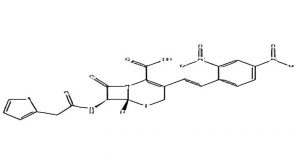
It plays an important role in microbiological research, antibiotic resistance studies, and the development of new antibacterial agents.
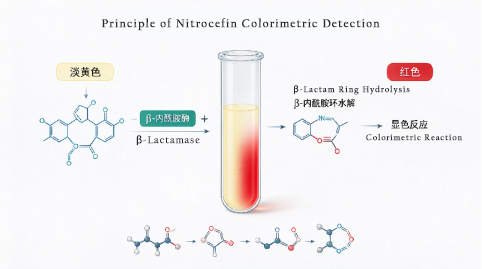
1. How Does Nitrocefin Detect Beta-Lactamase Activity?
ニトロセフィン is a chromogenic cephalosporin substrate containing a characteristic beta-lactam ring. It is primarily used as a research and diagnostic reagent for detecting beta-lactamase activity rather than as a therapeutic antibiotic.
When Nitrocefin comes into contact with beta-lactamases capable of hydrolyzing the substrate, its beta-lactam ring undergoes enzymatic cleavage. This reaction changes the molecular structure and spectral properties of Nitrocefin, typically producing a visible color transition from yellow to red.
The color change can be observed visually or measured quantitatively using spectrophotometric methods, providing a convenient approach to beta-lactamase activity analysis.
The main advantages of Nitrocefin include:
- Clear Colorimetric Response: The yellow-to-red color transition provides a visual indication of beta-lactamase-mediated hydrolysis.
- Convenient Detection: Suitable for microbiology laboratories and various enzyme research applications.
- Quantitative Analysis: Changes in absorbance can be measured to investigate enzyme activity and reaction rates.
- Versatile Research Applications: Useful for beta-lactamase detection, enzyme kinetics studies, and inhibitor screening.
It should be noted that different beta-lactamases exhibit varying abilities to hydrolyze Nitrocefin. Therefore, experimental results must be interpreted according to the specific enzyme, assay conditions, and analytical methods used.
2. The Role of ニトロセフィン in Studying Bacterial Resistance Mechanisms
Bacterial resistance to beta-lactam antibiotics can arise through several mechanisms, including beta-lactamase-mediated antibiotic hydrolysis, alterations in penicillin-binding proteins (PBPs), reduced membrane permeability, and active efflux systems.
Nitrocefin is primarily used to investigate beta-lactamase-mediated resistance mechanisms.
2.1 Detection of Beta-Lactamase Activity
The chromogenic properties of Nitrocefin allow researchers to detect beta-lactamase activity in bacterial samples or purified enzyme preparations.
By monitoring the colorimetric response and changes in absorbance, researchers can further investigate enzyme activity under different experimental conditions.
These measurements provide valuable information for understanding beta-lactamase-related resistance mechanisms.
2.2 Beta-Lactamase Enzyme Kinetics Studies
In enzymology research, ニトロセフィン serves as a model substrate for investigating the catalytic hydrolysis of beta-lactam antibiotics by beta-lactamases.
By measuring reaction rates at different substrate concentrations, researchers can determine relevant enzyme kinetic parameters and evaluate the catalytic characteristics of different beta-lactamase preparations.
Such studies help improve the understanding of enzyme behavior and provide experimental data for further antimicrobial resistance research.
2.3 Supporting the Investigation of Different Resistance Mechanisms
A positive Nitrocefin test generally indicates the presence of beta-lactamase activity capable of hydrolyzing the substrate.
However, a negative result does not necessarily exclude beta-lactamase production or other antibiotic resistance mechanisms.
Additional methods, including antimicrobial susceptibility testing, molecular assays, and other laboratory analyses, may be required to investigate alternative resistance pathways.
Therefore, Nitrocefin testing provides useful evidence for resistance mechanism studies but cannot independently determine the complete antibiotic resistance phenotype or identify a specific beta-lactamase subtype.
3. The Value of Nitrocefin in Antibacterial Drug Development
With increasing concerns about bacterial antibiotic resistance, the development of novel beta-lactamase inhibitors and the optimization of antibacterial drug structures have become important areas of pharmaceutical research.
ニトロセフィン can be used to establish beta-lactamase activity assays, providing experimental support for antimicrobial drug discovery and development.
3.1 Beta-Lactamase Inhibitor Screening
By comparing Nitrocefin hydrolysis rates before and after the addition of candidate inhibitors, researchers can assess the inhibitory effects of potential compounds against target beta-lactamases.
This approach provides a useful preliminary screening method for identifying compounds worthy of further investigation.
3.2 Research on Beta-Lactamase Stability of Antibacterial Agents
Nitrocefin-based assays can be used to characterize relevant beta-lactamase activity.
When combined with direct antibiotic hydrolysis studies and antimicrobial susceptibility testing, these assays help researchers investigate how different beta-lactamases interact with antibacterial agents.
The resulting information can support the structural optimization and development of new antibacterial compounds.
3.3 Antimicrobial Resistance Surveillance Research
In microbiological and antimicrobial resistance surveillance studies, Nitrocefin can serve as a tool for detecting beta-lactamase activity and investigating resistance-related characteristics in selected bacterial isolates.
However, standardized antimicrobial susceptibility testing and additional confirmatory methods remain necessary for comprehensive resistance assessment.
4. Future Applications of Nitrocefin in Antibiotic Resistance Research
Beta-lactamases remain a major focus of bacterial antibiotic resistance research.
As research into resistant pathogens, beta-lactamase inhibitors, and antimicrobial drug evaluation continues to advance, chromogenic substrates that provide convenient detection and support quantitative analysis remain valuable laboratory tools.
With its characteristic colorimetric response and broad applicability in enzyme assays, Nitrocefin supports beta-lactamase activity detection, bacterial resistance mechanism studies, and antibacterial drug development.
長沙玉登新材料有限公司 is a Nitrocefin manufacturer and supplier, providing Nitrocefin and related research materials for microbiological research, beta-lactamase detection, and antimicrobial drug development.
With manufacturing capabilities and product supply services, the company supports research institutions, pharmaceutical developers, and industrial customers with their research material requirements.
For Nitrocefin product specifications, technical information, samples, bulk orders, or manufacturing inquiries, please contact Changsha Yuteng New Materials Co., Ltd. for further details.


