 JP
 EN
 DE
 KR
 RU
 FR
 ES


Plant-Derived 7-Dehydrocholesterol: Ushering in a New Era of Vitamin D3 Synthesis
Vitamin D3 is an essential nutrient involved in calcium and phosphorus metabolism and the maintenance of normal bone health in humans and animals. It is widely used in pharmaceuticals, dietary supplements, food fortification, and animal nutrition.
As manufacturers increasingly prioritize raw material origin, consistent product quality, and supply chain traceability, plant-derived starting materials for vitamin D3 synthesis are attracting growing attention.
7-Dehydrocholesterol (7-DHC, CAS No. 434-16-2) is an important sterol compound and a key precursor for vitamin D3 synthesis. Under controlled ultraviolet irradiation, 7-dehydrocholesterol undergoes a photochemical reaction to form previtamin D3, which subsequently converts into vitamin D3 (cholecalciferol) through thermal isomerization.
Changsha Yuteng New Materials Co., Ltd., a direct manufacturer of plant-derived 7-dehydrocholesterol in China, produces high-purity 7-DHC with a purity of ≥98%. Manufactured using plant-derived sterols as starting materials, the product provides a non-animal-derived raw material option for vitamin D3 production, pharmaceutical chemical applications, and life science research.
Through factory-direct supply, Yuteng New Materials supports customers seeking consistent raw material quality, reliable sourcing, technical documentation, and bulk purchasing solutions.
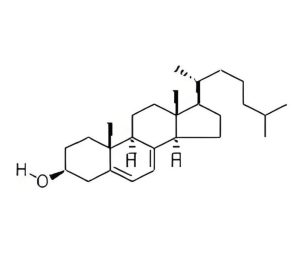
1. Key Characteristics and Advantages of Plant-Derived 7-Dehydrocholesterol
7-デヒドロコレステロール is an important intermediate in the cholesterol biosynthesis pathway.
Its molecular structure contains a conjugated double-bond system that enables it to absorb ultraviolet radiation within specific wavelength ranges and undergo photochemical reactions. This characteristic forms the chemical basis for its use as a vitamin D3 precursor.
Compared with conventional routes involving animal-derived starting materials, plant-derived 7-dehydrocholesterol offers several advantages.
1.1 Plant-Derived Origin and Alternative Raw Material Sourcing
Using plant sterols as starting materials reduces dependence on animal-derived raw materials and provides an alternative for manufacturers seeking non-animal-derived ingredients.
This sourcing approach is particularly relevant to customers with specific raw material origin and traceability requirements.
Claims relating to vegan suitability, non-GMO status, or compliance with particular sourcing standards should be verified against the complete manufacturing process and relevant supporting documentation.
1.2 A Key Precursor for Vitamin D3 Synthesis
With its well-defined molecular structure and characteristic photochemical properties, 7-dehydrocholesterol is widely used as a key precursor in vitamin D3 manufacturing.
Raw material purity, impurity profile, and stability are important factors influencing subsequent photochemical conversion and product quality control.
1.3 High Purity and Defined Quality Specifications
Yuteng New Materials manufactures plant-derived 7-dehydrocholesterol with a specified purity of ≥98%.
The product can be evaluated through parameters such as assay purity, appearance, related substances, and other relevant physicochemical characteristics.
Clearly defined specifications help downstream manufacturers establish raw material acceptance criteria and quality control procedures.
1.4 Versatility in Research Applications
Beyond vitamin D3 synthesis, 7-dehydrocholesterol is used in sterol metabolism studies, photochemical reaction research, and related life science applications.
2. Technical Specifications of Plant-Derived 7-Dehydrocholesterol
Changsha Yuteng New Materials Co., Ltd. manufactures plant-derived 7-dehydrocholesterol as a white to off-white crystalline powder for vitamin D3 synthesis, pharmaceutical chemical processes, and research applications.
| Parameter | Specification |
|---|---|
| Product Name | 7-デヒドロコレステロール |
| Abbreviation | 7-DHC |
| CAS Number | 434-16-2 |
| Molecular Formula | C₂₇H₄₄O |
| Molecular Weight | 384.64 g/mol |
| Appearance | White to off-white crystalline powder |
| Purity | ≥98% |
| Raw Material Origin | Plant-derived sterols |
| Manufacturer | 長沙玉登新材料有限公司 |
| Supply Type | Direct Manufacturer / Factory-Direct Supply |
| Non-GMO Status | Subject to relevant supporting documentation |
| TSE/BSE Status | Subject to relevant origin declarations and documentation |
| Storage Conditions | Store tightly sealed and protected from light |
| Recommended Storage Temperature | −20°C, subject to product stability data and labeling requirements |
7-デヒドロコレステロール is sensitive to light and oxidative conditions. Appropriate control of light exposure, temperature, and contact with air during storage, transportation, and handling is important for maintaining raw material quality.
3. Major Applications of 7-Dehydrocholesterol
3.1 Industrial Vitamin D3 Production
Vitamin D3 synthesis is one of the most important industrial applications of 7-dehydrocholesterol.
During vitamin D3 manufacturing, 7-dehydrocholesterol undergoes a photochemical reaction under controlled ultraviolet irradiation, initially forming previtamin D3. Subsequent thermal isomerization converts previtamin D3 into vitamin D3.
This process involves several critical manufacturing parameters, including irradiation wavelength, reaction temperature, solvent system, conversion efficiency, and by-product control.
As an upstream synthesis material, the purity, impurity profile, and batch-to-batch consistency of 7-dehydrocholesterol are important considerations in process optimization and manufacturing quality control.
Vitamin D3 manufactured through this route may be further processed for various applications, provided that the final ingredient meets applicable regulatory requirements and quality standards.
- Pharmaceutical Formulations: Production of vitamin D3 ingredients meeting relevant pharmaceutical quality requirements.
- Dietary Supplements: Development of vitamin D3 supplementation products.
- Food Fortification: Applications in dairy products, baked goods, and other food categories where vitamin D3 fortification is permitted.
- Animal Nutrition: Production of vitamin D3 ingredients for animal nutrition applications in accordance with applicable feed regulations.
It is important to distinguish 7-dehydrocholesterol from vitamin D3 itself. 7-Dehydrocholesterol is a synthesis precursor, not a direct substitute for vitamin D3 in finished pharmaceutical, food, or feed products.
3.2 Cosmetics and Skin Photobiology Research
7-Dehydrocholesterol occurs naturally in human skin and serves as an important precursor for vitamin D3 formation following exposure to UVB radiation.
This physiological role makes it a valuable research material in skin photobiology, ultraviolet-induced reactions, and vitamin D metabolism studies.
Relevant research areas include:
- Photochemical conversion of 7-dehydrocholesterol in human skin.
- Effects of different ultraviolet exposure conditions on vitamin D3 formation.
- Skin sterol metabolism and associated physiological processes.
- Stability of 7-dehydrocholesterol and its photochemical products.
For cosmetic research and development, 7-dehydrocholesterol may be investigated as a candidate material in fundamental studies and formulation feasibility assessments.
However, its suitability for use as a cosmetic ingredient, safety profile, permitted conditions of use, and any claimed cosmetic benefits must be evaluated according to the regulations and supporting experimental evidence applicable in the target market.
Its natural involvement in cutaneous vitamin D3 synthesis does not, by itself, establish sunscreen efficacy or skin-repair benefits.
3.3 Biomedical and Life Science Research
7-Dehydrocholesterol is not only a precursor in vitamin D3 synthesis but also an important research compound for investigating cholesterol metabolism and related disease mechanisms.
Sterol Metabolism Research
7-Dehydrocholesterol is an intermediate in the cholesterol biosynthesis pathway. Under normal physiological conditions, the enzyme 7-dehydrocholesterol reductase (DHCR7) catalyzes its conversion into cholesterol.
By analyzing 7-dehydrocholesterol and related metabolites, researchers can investigate sterol biosynthesis pathways and their regulatory mechanisms.
Photochemistry and Vitamin D Metabolism Studies
7-Dehydrocholesterol is used to investigate ultraviolet-induced photochemical reactions, previtamin D3 formation, and subsequent isomerization processes.
These studies provide experimental insights for vitamin D3 manufacturing process development and photobiology research.
Research into Related Genetic Disorders
Smith-Lemli-Opitz syndrome (SLOS) is a genetic disorder associated with impaired DHCR7 function. One of its biochemical characteristics is disrupted cholesterol synthesis accompanied by abnormal accumulation of 7-dehydrocholesterol.
Accordingly, the measurement of 7-dehydrocholesterol and related metabolites is relevant to biochemical investigations and diagnostic research involving SLOS.
In this context, 7-dehydrocholesterol is primarily a research and analytical target rather than a substance routinely administered to treat the disorder.
3.4 Pharmaceutical Chemistry and Intermediate Research
With its defined sterol framework and characteristic chemical reactivity, 7-dehydrocholesterol can also be used in research involving steroid-related compound synthesis, photochemical transformations, and pharmaceutical chemical processes.
Researchers may evaluate its suitability as a synthetic intermediate according to the target compound and intended manufacturing route.
4. How to Select High-Quality Plant-Derived 7-Dehydrocholesterol
For vitamin D3 manufacturers, pharmaceutical chemical companies, and research institutions, selecting plant-derived 7-dehydrocholesterol requires consideration of both raw material origin and technical quality.
4.1 Purity and Impurity Control
Raw material purity and impurity composition may affect subsequent photochemical reactions, purification processes, and final product quality.
Purchasers should carefully review product specifications and batch-specific Certificates of Analysis.
4.2 Plant Origin and Traceability
For customers requiring non-animal-derived raw materials, it is important to evaluate the origin of starting materials, manufacturing processes, and relevant supporting documentation.
These factors help determine whether the product meets specific sourcing and regulatory requirements.
4.3 Light and Oxidative Stability
7-Dehydrocholesterol is photosensitive. Appropriate packaging, storage, and transportation conditions help preserve raw material quality.
Downstream manufacturers should also conduct stability assessments under their intended processing and storage conditions.
4.4 Batch Consistency and Supply Reliability
For industrial vitamin D3 production, consistent raw material quality is important for process validation and manufacturing control.
Working directly with a manufacturer capable of maintaining stable specifications and continuous supply can support reliable procurement and production planning.
5. Changsha Yuteng New Materials: A Direct Manufacturer of Plant-Derived 7-Dehydrocholesterol in China
Changsha Yuteng New Materials Co., Ltd. is a direct manufacturer and factory supplier of plant-derived 7-dehydrocholesterol (7-DHC, CAS No. 434-16-2) in China.
The company manufactures plant-derived 7-dehydrocholesterol with a purity of ≥98%, supplying raw materials for vitamin D3 synthesis, pharmaceutical chemical manufacturing, and life science research.
As a source manufacturer, Yuteng New Materials focuses on product quality, raw material traceability, manufacturing consistency, and dependable supply.
Why Choose Yuteng New Materials?
- Direct Factory Supply: Purchase plant-derived 7-dehydrocholesterol directly from the manufacturer.
- High-Purity Raw Material: 7-DHC with a specified purity of ≥98%.
- Plant-Derived Starting Materials: Manufactured using a plant sterol-based synthesis route.
- Consistent Quality: Quality control focused on product specifications and batch-to-batch consistency.
- Flexible Supply Solutions: Support for samples, customized purchasing requirements, and bulk orders.
- Technical Documentation: Product specifications and relevant quality documentation available upon request.
Whether you are developing vitamin D3 manufacturing processes, sourcing pharmaceutical chemical intermediates, or conducting sterol metabolism research, Yuteng New Materials can support your raw material procurement requirements.
Looking for a reliable plant-derived 7-dehydrocholesterol manufacturer in China?
連絡先 長沙玉登新材料有限公司 for product specifications, Certificates of Analysis (COA), sample inquiries, factory-direct pricing, and bulk supply solutions.