
 JP
 EN
 DE
 KR
 RU
 FR
 ES


Sodium Polyanethole Sulfonate (SPS): From Anticoagulant Properties to Blood Culture Applications — How to Select the Right Raw Material
For blood culture reagent manufacturers, consistent diagnostic performance depends not only on the culture medium formulation but also on the quality and consistency of the raw materials used.
Sodium Polyanethole Sulfonate (SPS) is one such important functional ingredient.
SPS acts as an anticoagulant and inhibits certain natural antimicrobial activities in blood, helping create suitable conditions for microbial recovery in vitro. However, SPS materials with different specifications or from different sources may behave differently in reagent formulations and manufacturing processes.
Therefore, selecting SPS involves more than evaluating its anticoagulant activity. Purity, impurity profile, molecular weight, formulation compatibility, and batch-to-batch consistency are equally important considerations.
As a direct manufacturer of Sodium Polyanethole Sulfonate in China, 長沙玉登新材料有限公司 supplies SPS raw materials and customized solutions for blood culture media manufacturers, in vitro diagnostic (IVD) companies, and research institutions.
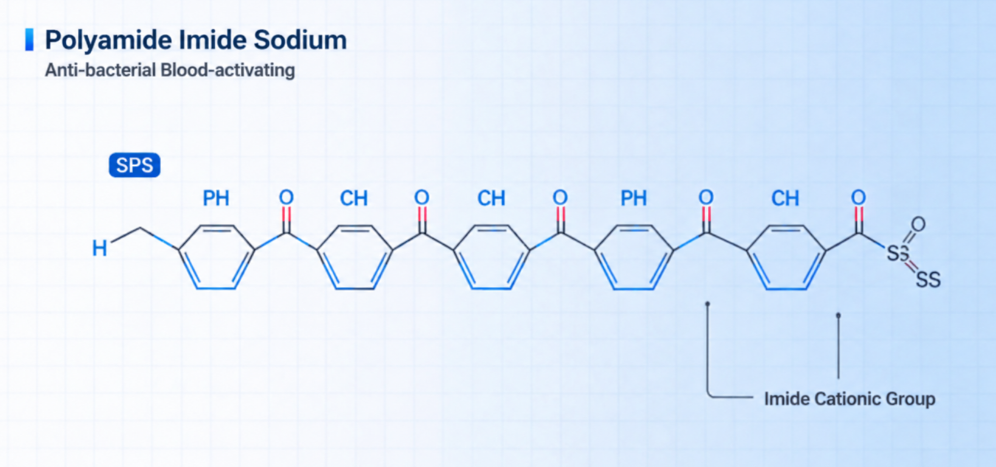
1. Why Is SPS Used in Blood Culture Systems?
Sodium Polyanethole Sulfonate (SPS) is a water-soluble anionic polymer containing sulfonate groups that contribute to its hydrophilic properties.
One of its most established applications is as an anticoagulant and functional additive in blood culture media.
After blood is collected, the coagulation process may be activated, leading to fibrin formation and clotting. Clot formation during blood culture can interfere with adequate contact between the blood sample and the culture medium, making subsequent culture procedures more difficult.
Sodium Polyanethole Sulfonate (SPS) interferes with the coagulation process, helping prevent clot formation and maintain appropriate conditions for microbial cultivation.
However, its value in blood culture extends beyond anticoagulation.
Complement proteins, phagocytic cells, and other natural defense components in blood may continue to affect the survival of certain microorganisms under in vitro culture conditions.
SPS can inhibit some complement-mediated and other natural antimicrobial activities in blood, reducing their interference with microbial recovery.
In other words, SPS performs two important functions in blood culture systems: maintaining suitable sample conditions and improving the culture environment for certain microorganisms.
It should be noted that SPS does not completely suppress all immune responses or universally neutralize residual antimicrobial agents. Its actual performance depends on the microorganisms involved, the culture medium formulation, and the conditions of use.
2. Why Does SPS Raw Material Quality Matter in Blood Culture Reagent Development?
For blood culture reagent manufacturers, SPS is not simply an auxiliary ingredient added to the culture medium. It is a functional raw material that must be compatible with the overall detection system.
Variations in raw material quality may increase the complexity of formulation validation and manufacturing quality control.
2.1 Purity and Impurity Control
Blood culture systems must provide suitable conditions for the growth and recovery of target microorganisms.
Undesirable impurities in SPS raw materials may affect the physicochemical properties of the culture medium or the growth of certain microorganisms.
Manufacturers should therefore evaluate SPS purity, impurity levels, and relevant quality specifications, and confirm suitability through formulation-specific testing.
2.2 Molecular Weight and Product Specifications
As a polymeric material, SPS has molecular weight characteristics and a molecular weight distribution that should be considered during raw material selection.
Different molecular weight specifications may influence its physicochemical behavior and interactions with other components in a particular formulation.
For customers with specific formulation requirements, different molecular weight grades can be evaluated through appropriate application testing.
2.3 Batch-to-Batch Consistency
During laboratory development, manufacturers may require only small quantities of SPS for initial formulation testing.
However, as a product progresses to pilot-scale and commercial manufacturing, variations between raw material batches can increase the workload associated with process validation and quality management.
Consistent product specifications, effective quality management, and reliable long-term supply are therefore particularly important for blood culture reagent manufacturers.
2.4 Formulation Compatibility
Blood culture systems vary in their medium composition, target microorganisms, and detection methods.
A higher SPS concentration does not necessarily produce better results. Certain microorganisms may be sensitive to SPS, making it essential to evaluate the appropriate concentration and compatibility within the intended culture medium.
For diagnostic reagent manufacturers, validated raw material specifications and formulation conditions are fundamental to maintaining consistent product performance.
3. Beyond Blood Culture: Other Potential Applications of SPS
Blood culture is the most established and representative application of SPS. However, its anticoagulant properties and anionic polymer structure also provide a basis for research in other biochemical systems.
3.1 In Vitro Blood Sample Processing
SPS may be used as an anticoagulant component in selected in vitro experimental systems to help reduce interference caused by blood clotting during sample processing.
However, different analytical methods have different anticoagulant requirements.
The suitability of SPS for a particular sample preparation method must be validated against the target analytes and analytical procedures. It should not be considered a direct replacement for all conventional blood collection anticoagulants.
3.2 Biomolecular Interaction Research
Sodium Polyanethole Sulfonate (SPS) contains multiple negatively charged groups along its polymer chains, enabling interactions with certain charged biomolecules.
Researchers can use these characteristics to investigate interactions between polyelectrolytes and proteins or other biological components, as well as their effects on the properties of a given system.
3.3 Colloidal and Polymeric Systems
In gelatin-based and other biopolymer or colloidal systems, SPS may serve as an anionic polymer research material for investigating complex formation, dispersion, and aggregation behavior.
It is important to note that interactions between SPS and other components do not always improve stability. Under certain conditions, they may instead lead to aggregation or precipitation.
Practical applications must therefore be evaluated through formulation-specific experiments.
These research areas demonstrate the broader material properties of SPS, but they should be distinguished from its established use in blood culture media. New applications require appropriate experimental validation.
4. SPS Procurement: Why Choose a Direct Manufacturer?
For IVD reagent companies, purchasing SPS involves more than sourcing a raw material that meets immediate technical requirements. It also involves establishing a stable, long-term supply relationship.
As production scales up, a supplier’s ability to consistently deliver materials that meet defined specifications becomes increasingly important for manufacturing schedules and quality management.
Several factors should be considered when evaluating an SPS manufacturer.
Manufacturing and Supply Capability
Reliable production and supply help manufacturers plan research, pilot-scale trials, and commercial manufacturing while reducing uncertainty associated with raw material availability.
Clearly Defined Product Specifications
For customers with specific molecular weight, purity, or other quality requirements, clear product specifications and technical documentation support raw material selection and formulation validation.
Customization Capability
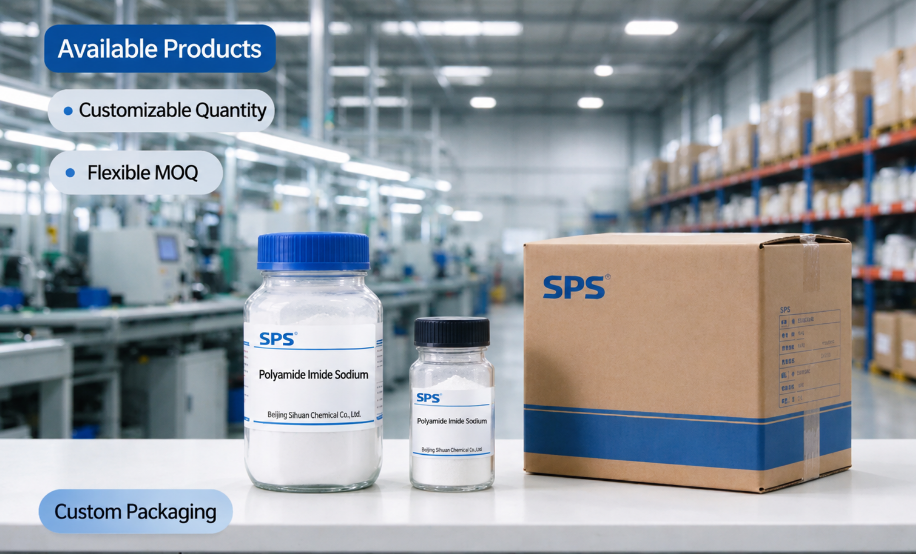
Customers may have different requirements depending on their development stage, purchasing volume, and packaging preferences.
A manufacturer offering flexible supply solutions can better support both small-scale formulation testing and bulk procurement.
Batch Quality Management
Long-term raw material consistency depends on manufacturing process control, quality testing, and effective batch management.
It should not be assessed solely on the basis of a single sample or one batch of test results.
For diagnostic reagent manufacturers using SPS on a continuous basis, these factors are just as important as raw material purity.
5. Changsha Yuteng New Materials: A Direct SPS Manufacturer in China
長沙玉登新材料有限公司 is a direct manufacturer and factory supplier of Sodium Polyanethole Sulfonate (SPS) in China, providing raw materials for blood culture media manufacturers, IVD reagent producers, and scientific research institutions.
The company focuses on product quality, impurity control, batch-to-batch consistency, and the specific technical requirements of different applications.
Yuteng New Materials offers the following services to support customers throughout product development and procurement:
- High-Quality SPS Raw Materials: SPS products with attention to purity, impurity control, and consistent batch quality.
- Customized Molecular Weight: Molecular weight specifications and customization options can be discussed according to customers’ formulation development requirements.
- Factory-Direct Supply: Direct sourcing from the manufacturer, supporting both R&D samples and bulk purchasing.
- Flexible Procurement Solutions: Minimum order quantities (MOQs), packaging specifications, and delivery requirements can be discussed based on inventory and production arrangements.
- Technical Documentation and Support: Product specifications and relevant technical information to assist with raw material selection and application validation.
For blood culture reagent manufacturers, selecting SPS requires consideration of both current formulation compatibility and long-term supply reliability as production scales up.
Changsha Yuteng New Materials aims to establish long-term partnerships with diagnostic reagent manufacturers worldwide through consistent product quality and flexible supply services.
Looking for a reliable Sodium Polyanethole Sulfonate (SPS) manufacturer in China?
連絡先 長沙玉登新材料有限公司 for SPS product specifications, customized molecular weight options, samples, technical documentation, factory-direct pricing, and bulk purchasing inquiries.


